
Fox River and Oswego's Defining Natural Waterway
The Fox River is the natural feature that shaped Oswego, Illinois, from its earliest days as a frontier settlement to its present role as a growing Kendall County community. Flowing south through the village on its way to the Illinois River, the Fox gave early settlers a place to cross, a source of water power, and fertile land along its banks.
Today the river runs past parks, trails, and neighborhoods, offering residents places to paddle, fish, and walk within the village limits. For Oswego residents, Kendall County families, and anyone interested in how a river guided a community’s growth, the Fox River offers an essential view of Oswego’s history and character.
The Fox River’s Course Through Northern Illinois
The Fox River begins in southeastern Wisconsin and flows south across northern Illinois for roughly 200 miles before joining the Illinois River at Ottawa. Along the way it passes through a chain of river communities in Kane and Kendall counties, including Elgin, St. Charles, Geneva, Batavia, Aurora, Montgomery, Oswego, and Yorkville.
Through Oswego, the river follows a wide, shallow valley with wooded banks and occasional islands. Its course here is gentler than in some upstream stretches, which makes it accessible for paddlers and anglers. The river also drains a large watershed of farmland and suburbs, so its water levels and quality reflect what happens across much of the region upstream.
Oswego’s Origins as a River Crossing
Settlers arrived in the Oswego area in the 1830s, drawn by the river and the open prairie around it. A natural crossing point on the Fox made the site a stopping place for travelers moving across northern Illinois, and a small village grew up near the ford. Early residents used the river for water, and mills along its banks processed grain from surrounding farms.
As roads and later railroads reached the area, Oswego developed into a farm town serving the surrounding countryside. The river remained central to daily life, shaping where the village’s main streets ran and where homes and businesses were built. Many of Oswego’s older buildings still sit near the river, reflecting how the community grew outward from the crossing that started it.

Image Credit: Jauerback, CC BY-SA 3.0, via Wikimedia Commons
Recreation Along the River in Oswego
The Fox River is now one of Oswego’s main recreational assets. Riverside parks give residents access to the water for fishing, picnicking, and watching wildlife. Hudson Crossing Park, located along the river near downtown, offers walking paths, river views, and space for community events.
The Oswegoland Park District publishes information on parks and trails in the Oswego area, including riverfront sites along the Fox. Paddlers use the river for canoeing and kayaking, especially in late spring through early fall when water levels are moderate. Anglers fish for species such as smallmouth bass and catfish, which are common in the Fox.
The Illinois Department of Natural Resources publishes the state’s fishing regulations, covering licenses, size and creel limits, and rules for anglers on Illinois rivers, including the Fox. Trails along parts of the river corridor let walkers and cyclists follow the water toward neighboring communities.
Northern Illinois Climate and the River’s Seasons
Northern Illinois’ climate shapes the Fox River’s character through the year. Normals from Chicago O’Hare International Airport, about 35 miles northeast of Oswego, show July highs in the mid-80s°F, January lows in the upper teens, and roughly 38 inches of annual precipitation, according to NOAA climate data for the Chicago O’Hare area.
Summers are warm and humid, while winters are cold enough for ice to form along the river’s edges. Spring is the river’s most changeable season. Snowmelt and heavy rain upstream can raise water levels quickly, and low-lying riverside areas may flood during wet periods.
Summer usually brings lower, slower water that suits paddling and fishing. In fall, the wooded banks turn color, and the river becomes a popular scenic backdrop for walks. Winter brings quieter days, with ice along the shore and fewer people on the water.
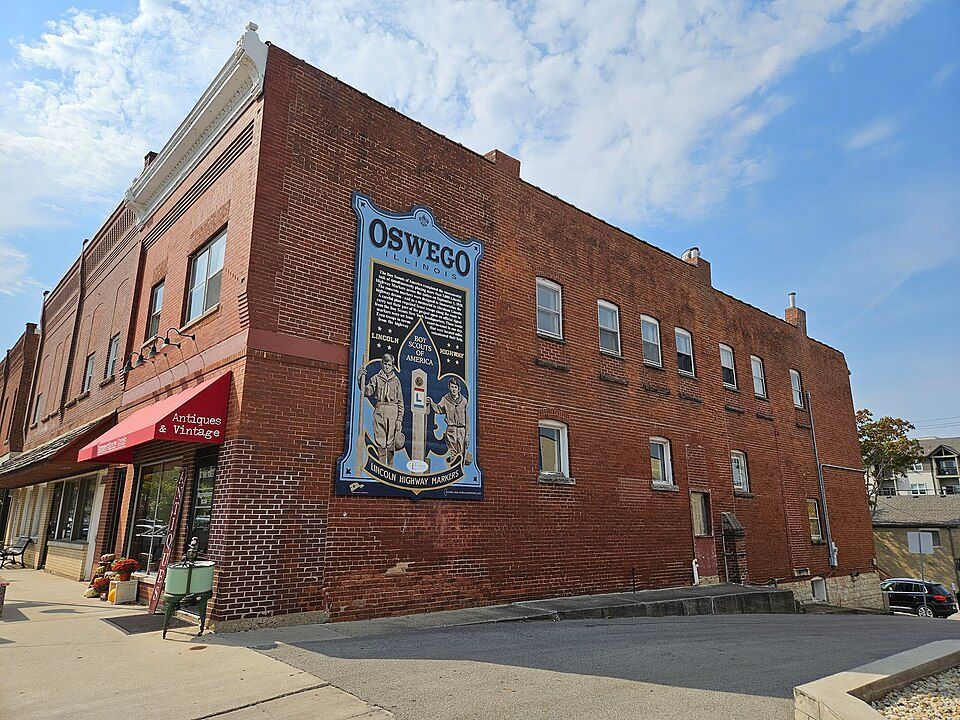
Image Credit: Teemu08, CC BY-SA 4.0, via Wikimedia Commons
The River’s Role in Oswego’s Community Identity
The Fox River ties Oswego’s past to its present. The crossing that drew the first settlers still marks the heart of the village, and the river continues to shape where people gather, walk, and spend time outdoors.
Riverfront parks and events give residents a shared connection to the water that runs through their community.
As Oswego has grown from a small farm town into a larger suburban community, the river has remained a constant. Efforts to protect water quality, preserve riverside open space, and improve public access reflect how much residents value it.
For Kendall County residents and anyone exploring the history and character of Oswego, Illinois, the Fox River remains the natural waterway at the center of the community’s story.
New Paragraph